

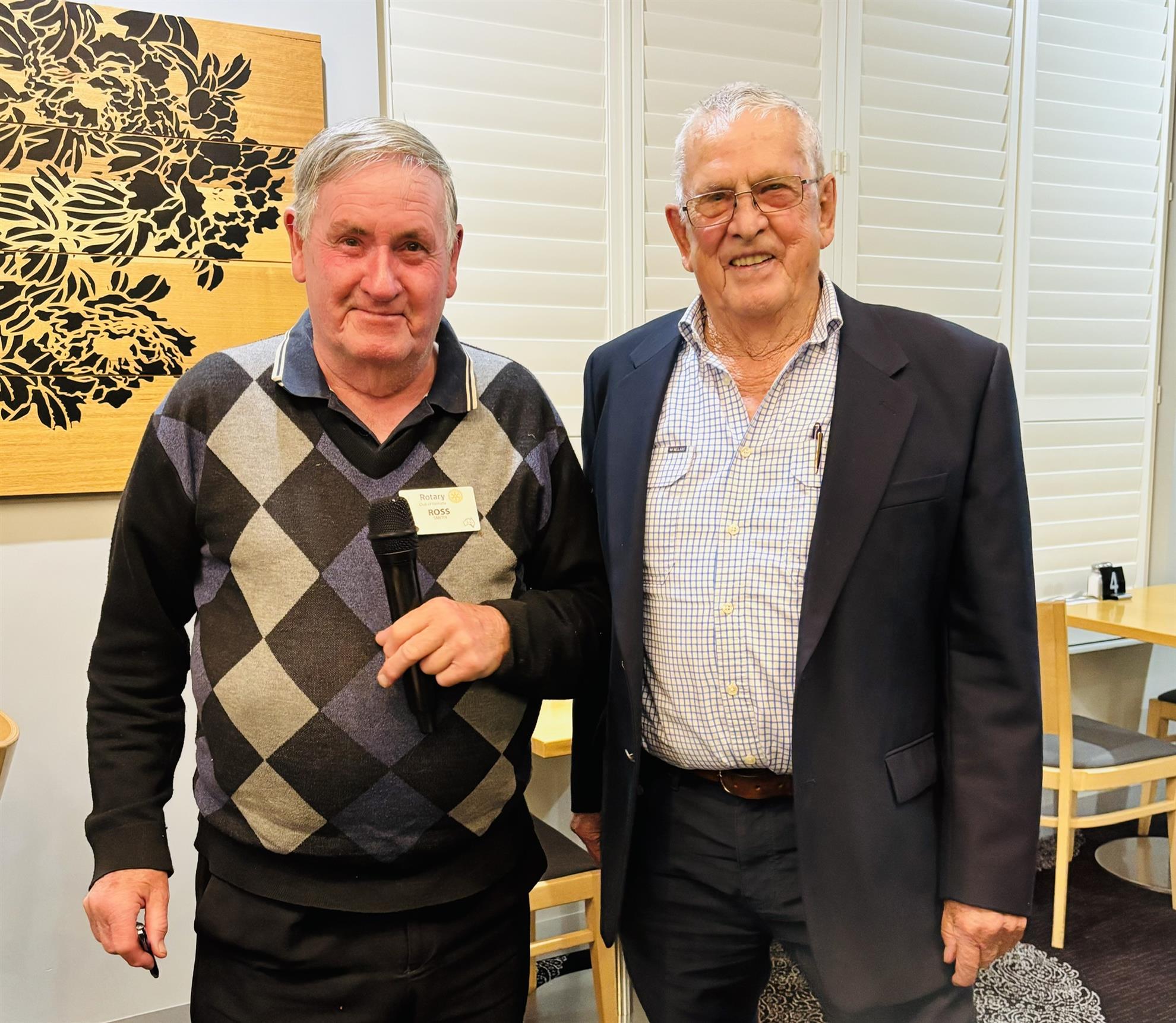
Barry Croke provided an insight into the history of agricultural education and the changing role of government in supporting the agricultural industry, with particular emphasis on Dookie Agricultural College.
Barry explained that during the 1960s, agriculture was recognised by government as an important industry that provided a broader public benefit. Significant government investment supported agricultural education, research and services, including work in areas such as wheat breeding and animal health.
By the 1970s and 1980s, government priorities began to change. Agricultural education became part of the broader College of Advanced Education system, and institutions such as Dookie faced increasing financial and structural pressures. Barry described how Dookie once operated as a thriving agricultural community, with farms, workshops, shops and around 52 houses, while providing students with extensive practical experience.
The 1980s brought considerable debate about the future of agricultural education, including pressure to consolidate tertiary education and move more agricultural education towards Melbourne. The speaker outlined the efforts made to maintain Dookie’s role and generate income through its farms, courses, conferences and industry services.
Barry spoke passionately about the loss of Dookie’s multifunctional role. In its earlier years, students spent considerable time living and working on the farms, gaining practical experience alongside their formal studies. Today, students from Melbourne may travel to Dookie for shorter practical experiences, while agricultural degrees have become more specialised.
Barry raised an important question about whether today’s agricultural students receive enough hands-on, practical experience during their university education.