

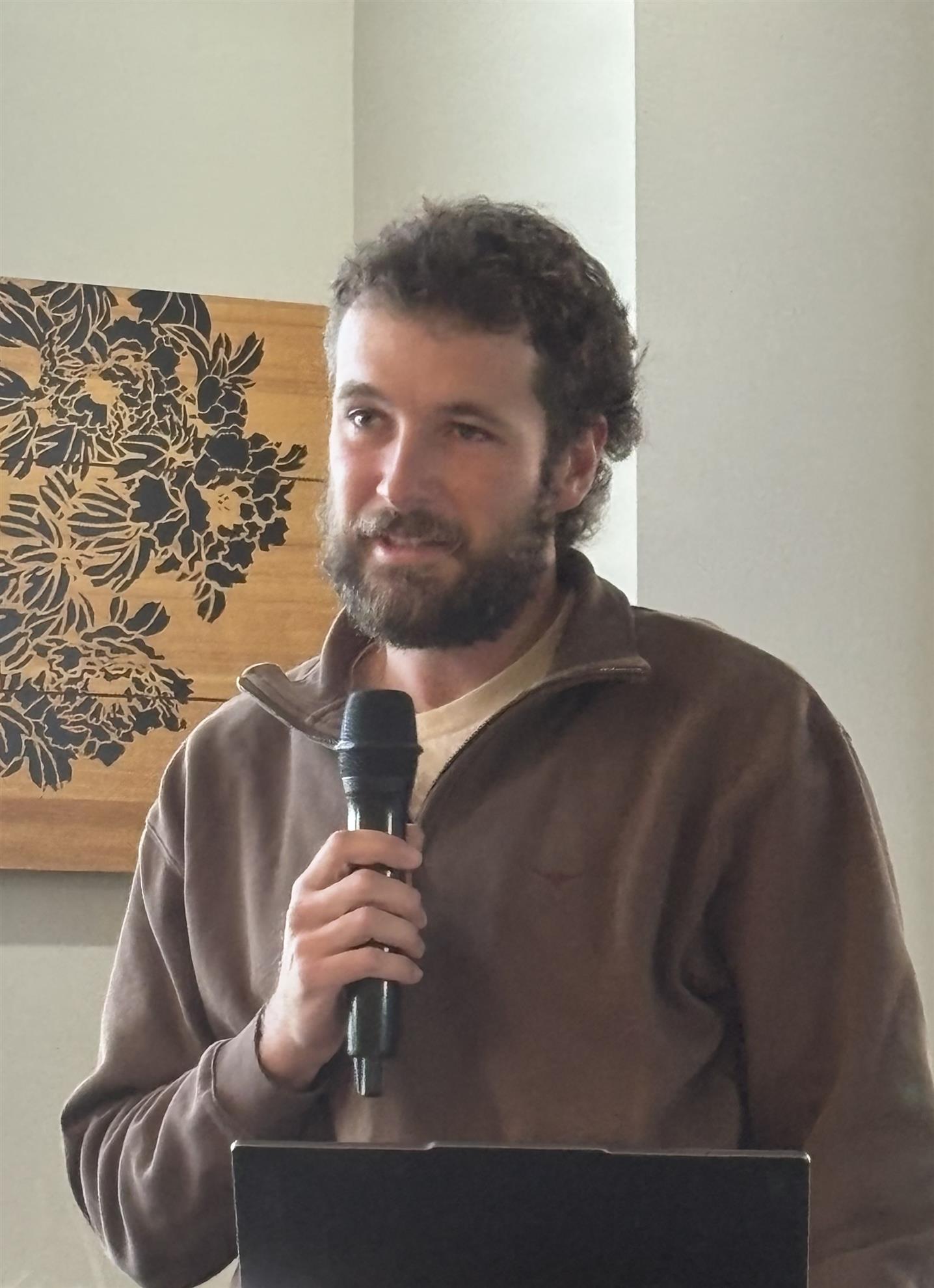
Will Phillips
Will’s grandfather established a fine Merino flock in the 1960s in Seymour, managing approximately 3,500 acres and 3,000 Merino breeding ewes. The operation peaked in the mid-90s, initially producing wool between 17 and 19 microns then transitioning to strong wool.
Will holds a Bachelor of Business Management and a Master’s of Ag Science (specialising in animal science). His experience includes work at sheep stations in the Grampians (Thermopylae) and contracting in drenching and mustering. He also spent a few years cropping with Fred Hodge.
Will is currently focused on transitioning a crossbred-heavy farm in Echuca toward a self-replacing Merino program to reduce long-term costs and diversify income through both wool and meat.
1. Breeding & Genetics:
Moving away from buying ewes by establishing a self-replacing flock using Waco (New South Wales) and Elma bloodlines.
Chose "big dual-purpose" ewes that are "tough" for flood-irrigated land (better foot health) and produce high-quality ewe lambs.
Increased scanning rates from 130% to 135% through nutritional management and classing ewes by weight before joining.
2. Feedlot Management
The farm utilises two feedlots: one manual and one automated.
Feedlots are high-cost operations (up to $5,000/day at peak capacity of 5,000 lambs). Efficiency is critical; the goal is to keep lambs in the lot for no more than 80 days to save approximately $50,000 in costs.
Lambs are sold at roughly 60kg live weight, yielding about 54% "over the hook."
3. Technology
Utilising electronic identification to track individual performance, specifically monitoring average daily weight gain.
The target is 300g/day. Data allows for automatic drafting of "underperformers" and identifying ewes that consistently produce twins.
Current market conditions are challenging. While profit was historically ~$5/head, rising input costs (lambs bought at $280 vs. $130 previously) mean many operations are currently only covering costs or making ~$1/head.